%20%20--%3E%0A%3Csvg%20version%3D%221.1%22%20xmlns%3D%22http%3A%2F%2Fwww.w3.org%2F2000%2Fsvg%22%20xmlns%3Axlink%3D%22http%3A%2F%2Fwww.w3.org%2F1999%2Fxlink%22%20x%3D%220px%22%20y%3D%220px%22%0A%09%20viewBox%3D%220%200%201941.76%20200%22%20style%3D%22enable-background%3Anew%200%200%201941.76%20200%3B%22%20xml%3Aspace%3D%22preserve%22%3E%0A%3Cstyle%20type%3D%22text%2Fcss%22%3E%0A%09.st0%7Bfill%3A%23FCEE21%3B%7D%0A%09.st1%7Bfill%3A%2300FF00%3B%7D%0A%09.st2%7Bfill%3A%23003594%3B%7D%0A%09.st3%7Bfill%3A%23FFD100%3B%7D%0A%09.st4%7Bfill%3A%23FFFFFF%3B%7D%0A%09.st5%7Bfill%3A%23FFA300%3B%7D%0A%3C%2Fstyle%3E%0A%3Cg%20id%3D%22Instructions%22%3E%0A%3C%2Fg%3E%0A%3Cg%20id%3D%22Assets%22%3E%0A%09%3Cg%3E%0A%09%09%3Cpath%20class%3D%22st3%22%20d%3D%22M185.24%2C90.86l13.93-52C206.22%2C12.57%2C197.02%2C0%2C170.73%2C0H53.59L0%2C200h53.71l17.91-66.86h22L109.71%2C200H164%0A%09%09%09l-16.08-71.14C167.2%2C125.14%2C179.35%2C112.86%2C185.24%2C90.86z%20M132.9%2C85.72c-1.07%2C4-2.52%2C5.14-6.52%2C5.14H82.96l12.71-47.43h43.43%0A%09%09%09c4%2C0%2C4.83%2C1.14%2C3.76%2C5.14L132.9%2C85.72z%22%2F%3E%0A%09%09%3Cpath%20class%3D%22st3%22%20d%3D%22M301.68%2C0L187.8%2C200h54.86l21.6-41.14h58.86L322.66%2C200h57.14L372.54%2C0H301.68z%20M286.6%2C116l37.94-72.28%0A%09%09%09l-0.8%2C72.28H286.6z%22%2F%3E%0A%09%09%3Cpolygon%20class%3D%22st3%22%20points%3D%22534.45%2C105.14%20517.77%2C0%20457.2%2C0%20403.61%2C200%20454.46%2C200%20485.31%2C84.86%20498.4%2C175.71%20530.97%2C175.71%20%0A%09%09%09592.74%2C84.86%20561.89%2C200%20613.89%2C200%20667.48%2C0%20607.48%2C0%20%09%09%22%2F%3E%0A%09%09%3Cpath%20class%3D%22st3%22%20d%3D%22M796.53%2C97.71C816.67%2C94%2C823.89%2C82%2C829.47%2C61.14l5.97-22.28C842.49%2C12.57%2C833.28%2C0%2C807%2C0H691.29L637.7%2C200%0A%09%09%09h118c26.28%2C0%2C42.22-12.57%2C49.27-38.86l7.2-26.86C816.98%2C116.28%2C816.57%2C99.71%2C796.53%2C97.71z%20M733.82%2C41.72h42%0A%09%09%09c4%2C0%2C4.84%2C1.14%2C3.77%2C5.14l-7.04%2C26.29c-1.07%2C4-2.52%2C5.14-6.52%2C5.14h-42L733.82%2C41.72z%20M753.39%2C153.14c-1.07%2C4-2.52%2C5.14-6.52%2C5.14%0A%09%09%09h-44.28l11.02-41.14h44.28c4%2C0%2C4.84%2C1.15%2C3.77%2C5.14L753.39%2C153.14z%22%2F%3E%0A%09%09%3Cpolygon%20class%3D%22st3%22%20points%3D%22925.66%2C0%20871.95%2C0%20818.36%2C200%20951.78%2C200%20964.03%2C154.29%20884.32%2C154.29%20%09%09%22%2F%3E%0A%09%09%3Cpolygon%20class%3D%22st3%22%20points%3D%22975.59%2C200%201029.3%2C200%201082.89%2C0%201029.18%2C0%20%09%09%22%2F%3E%0A%09%09%3Cpolygon%20class%3D%22st3%22%20points%3D%221197.07%2C106.29%201160.12%2C0%201106.7%2C0%201053.11%2C200%201105.1%2C200%201135.8%2C85.43%201176.25%2C200%201223.96%2C200%20%0A%09%09%091277.55%2C0%201225.55%2C0%20%09%09%22%2F%3E%0A%09%09%3Cpath%20class%3D%22st3%22%20d%3D%22M1290.74%2C50.29h22l-35.42%2C39.43h17.14l30.22-24.28c14.57-11.72%2C19.99-19.14%2C23.13-30.86L1357.07%2C0h-52.86%0A%09%09%09L1290.74%2C50.29z%22%2F%3E%0A%09%09%3Cpolygon%20class%3D%22st3%22%20points%3D%221472.44%2C44.57%201559.3%2C44.57%201571.24%2C0%201430.68%2C0%201377.09%2C200%201430.8%2C200%201451.31%2C123.43%20%0A%09%09%091520.17%2C123.43%201531.96%2C79.43%201463.1%2C79.43%20%09%09%22%2F%3E%0A%09%09%3Cpath%20class%3D%22st3%22%20d%3D%22M1615.39%2C0l-113.88%2C200h54.86l21.6-41.14h58.86l-0.45%2C41.14h57.14l-7.27-200H1615.39z%20M1600.31%2C116%0A%09%09%09l37.94-72.28l-0.8%2C72.28H1600.31z%22%2F%3E%0A%09%09%3Cpolygon%20class%3D%22st3%22%20points%3D%221889.77%2C0%201861.29%2C106.29%201824.34%2C0%201770.91%2C0%201717.32%2C200%201769.32%2C200%201800.02%2C85.43%201840.46%2C200%20%0A%09%09%091888.17%2C200%201941.76%2C0%20%09%09%22%2F%3E%0A%09%3C%2Fg%3E%0A%3C%2Fg%3E%0A%3C%2Fsvg%3E%0A)

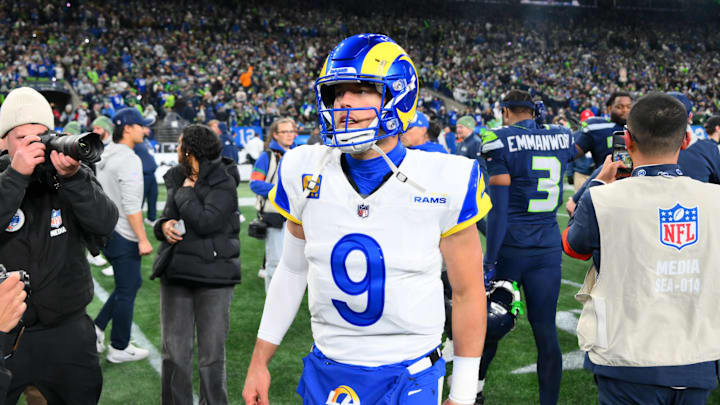
The Los Angeles Rams have every reason in the world to want Matthew Stafford back in 2026. And Stafford has just as much leverage, for now. The $40 million he's already owed just vested on March 15. He also won MVP. The team is a league frontrunner with him at the helm. And despite them drafting Ty Simpson in the first round of the 2026 NFL Draft, they are still in the best position to maximize their current roster by not driving their franchise quarterback into retirement.
Last year, they found common ground on a renegotiated two-year, $80 million deal worth $44 million in 2025 and $40 million in 2026 (the $4 million roster bonus he'd already collected pushed the total paper value to $84 million). That made him the 7th highest paid quarterback in 2025, coming off an up-and-down 2024.
Now entering 2026, Stafford is set to earn $40 million, less than last year. He's also coming off an MVP campaign. Before any compromise can be cut, both sides have to put a number on the table. Here's what those numbers look like, and where they meet.
The Rams' Opening Offer: A Solid Paper Raise, But A Small Effective One
A one-year, $50 million extension makes for an effective two-year, $90 million deal. Splitting cash flows evenly, Stafford gets $45 million in cash this year.
This is where Rams general manager Les Snead starts the conversation. A $1 million raise over the MVP season. Stafford moves from tied for 10th in 2026 cash to sole possession. For context, he was 7th last year, the year before he won MVP. This is a deal where the MVP costs him three spots in the cash hierarchy.
It's exactly the kind of opening offer a team makes to start talks. It's not reasonable on its face, but it does start the conversation.
Stafford's Counter: Top of The Market
A $60 million extension ties Stafford with Dak Prescott for the highest paid quarterback in the NFL by APY. The agent's case writes itself.
Dak got $60M APY without an MVP, without a ring, and without a deep playoff run. Stafford has all three. If $60M is the price for Dak, $60M is the floor for the reigning MVP, especially on a one-year extension where the Rams retain a clean exit, versus the four-year, $231M total commitment Dallas made.
The cash side reinforces it. At $60M in new money, Stafford's 2026 cash hits $50 million (tied with Daniel Jones for 7th), and his 2027 cash sits at a level where this negotiation doesn't need to happen a third time. That last point matters to both sides. For the Rams, the alternative is going through this same negotiation a year from now with even less leverage. They might as well buy two years of stability while they can.
This is the number Stafford's agent walks in with. It's defensible on the math, the precedent, and the leverage.
The Negotiated Compromise
With both anchors on the table, the compromise has somewhere to live.
A $55 million extension pushes Stafford to $47.5 million in 2026 and 8th overall in cash, keeping him roughly in line with his 2025 relative standing, with a modest raise. The Rams move off $50M because they can't credibly argue an MVP year warrants three spots of cash decline. Stafford moves off $60M because the agent who walks away from a $7.5M raise to argue about market position picks the wrong fight.
The structural argument that gets this done: 2027 cash flow. At $55M in new money, Stafford's 2027 number is high enough that neither side has an incentive to renegotiate next April. That's worth real money to both parties. The Rams avoid another forced restructure, and Stafford avoids another year of leverage erosion as he ages.
This is what most negotiations look like.
Stafford has the leverage that matters: the guarantee already vested, the MVP trophy is on his shelf. But the Rams have shown comfort in drawing a line and not crossing it. And Stafford is chasing legacy. That's worth something to him, and Los Angeles will use it.
Both sides know where this lands. The only question is how long they take to get there.
 Add us as a preferred source on Google